

Every warehouse has its own story
Behind every efficient warehouse are daily challenges: keeping goods moving, controlling costs, ensuring safety, and adapting to constant change. Just as no two chess games are alike, no two warehouses are exactly the same. Requirements can vary widely depending on factors such as your industry, business model, growth plans, and existing processes. What works perfectly in one warehouse may not be suitable in another. Success starts with understanding what matters most in your warehouse and addressing the right challenges at the right time.
Common warehouse challenges
Explore the four key topics that shape modern warehouse solutions and discover why having a reliable partner by your side makes all the difference – one who understands your current situation and develops smart, tailored solutions for today and tomorrow, so you can always stay one move ahead. Allowing you to master your warehouse. The smart way.
Tasks
A warehouse comprises many different application areas. Each area has its own tasks, space constraints, and performance requirements. This is why one forklift truck cannot do it all. Low-lift pallet trucks excel at efficient horizontal transport. Reach trucks dominate narrow aisles and high racking. Order pickers are built for fast, accurate picking. Placing the right truck in the right application is essential for ensuring smooth material flow, high efficiency, and safe operations throughout the entire warehouse.
What are the most common types of tasks in a warehouse?
- Horizontal transport – Efficient pallet movement across the warehouse, from short shuttle runs to long-distance transport.
- Truck loading & unloading (via ramp) – Fast transfer of goods between warehouse floor and trailer.
- Truck loading & unloading (from the side) – Smooth handling when accessing trucks laterally at the dock.
- Stacking operations – Safe and precise storage and retrieval of pallets at different heights.
- Wide or narrow aisle storage – Optimised manoeuvrability depending on available warehouse space.
- Order picking – Productive picking processes, from ground-level horizontal picking to high-level vertical picking.
Costs
In chess, a poor opening can cost you the entire game. The same is true in intralogistics: costs extend well beyond the initial investment. Downtime, maintenance requirements, and energy consumption directly impact daily operations and long-term profitability. Using the wrong type of truck for a specific task can increase wear and tear, inefficiencies, and hidden costs. It is therefore essential to understand these operational cost drivers in order to select solutions that will keep your warehouse productive, predictable, and cost-efficient.
These are the most common operational factors, impacting your daily efficiency and long term profitability:
- Downtime – Unexpected truck or system downtime can interrupt material flow and reduce productivity. Reliable service and fast support help keep trucks available and operations running smoothly.
- Maintenance – Frequent repairs increase operating expenses over time. Structured service agreements ensure regular inspections, predictable maintenance planning, and transparent costs while helping maintain long-term truck performance.
- Energy consumption – Inefficient trucks or charging strategies can increase energy costs. The right energy system and drive technology, matched to the specific application and utilisation profile, can significantly improve efficiency and reduce energy costs.
- Choosing the wrong type of truck – Using the wrong type of truck for a specific task can result in unnecessary wear and tear, inefficiencies, and hidden costs. Expert consultation helps to ensure that each warehouse application is equipped with the most suitable type of truck— preventing costly mistakes before they happen.
Risks
Risks arise where visibility and control are limited. Corners, crossings, and blind angles can create invisible zones and increase the risk of collisions – unless smart safety features make them visible. Uneven floors can affect stability, while a lack of driver access control can lead to the improper use of trucks. Identifying these risks is essential to protect people, goods, and operations.
Key risk factors include:
- Limited visibility at corners and crossings – Blind angles can hide trucks or pedestrians until it's too late. Collision warning and detection systems alert drivers in good time — turning blind spots into controlled zones.
- Uneven or damaged floors – Shaky or irregular surfaces can affect truck stability, load handling, and driver safety. Robust truck design, safety systems, and proper warehouse floor maintenance help to ensure stable and secure operations.
- Lack of driver access control – When anyone can operate a truck, the risk of improper use increases. Access control systems ensure only trained and authorised drivers are behind the wheel, improving safety and accountability.
Changes
Warehouse requirements rarely stay the same. Business growth, expanding operations, or new customer expectations demand greater performance and flexibility. At the same time, sustainability goals are reshaping the game for a lower carbon footprint. To stay competitive, warehouse equipment must adapt to these changes - by scaling with your business, boosting productivity, and supporting more sustainable operations. Key drivers of change include:
- Business expansion – Growing volumes and additional warehouse space require scalable equipment and flexible solutions that can handle increasing throughput without disrupting operations.
- Higher performance requirements – Faster processes and higher picking rates demand trucks and systems designed for greater efficiency, productivity, and reliability.
- Sustainability and carbon footprint – Environmental targets are pushing companies to reduce emissions and energy use. Efficient electric trucks, modern energy systems, and optimised operations help to lower the overall carbon footprint of warehouse activities.


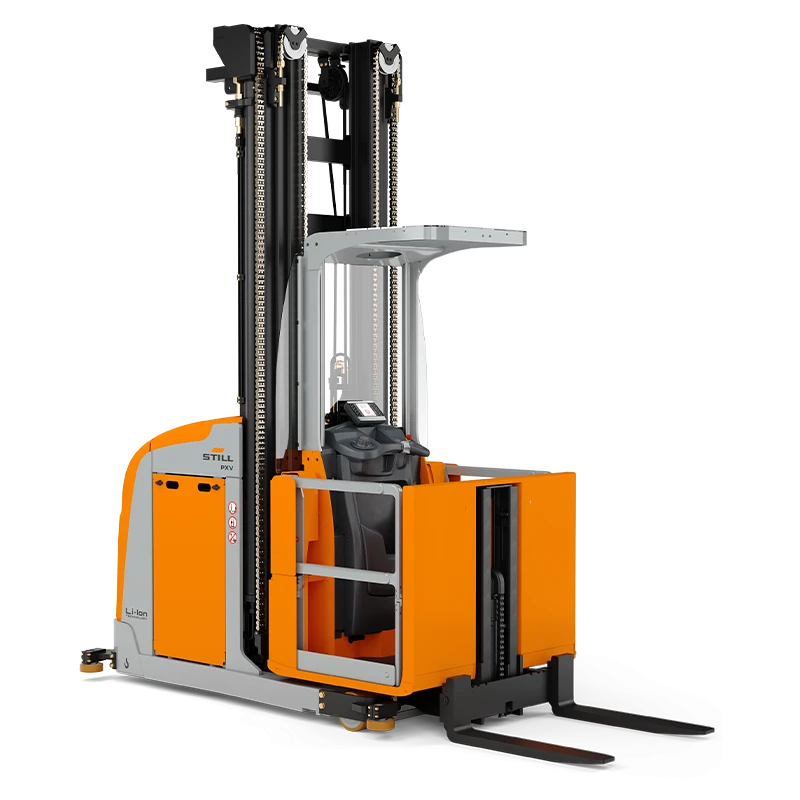

The right type of vehicle for every warehouse
STILL offers a wide range of vehicles that can be adapted to meet the specific requirements of any company.


We are there for you.
Do you have any questions or would you like personal advice?
Then you've come to the right place. Our team of experts will take care of your request - individually and quickly.
Call a consultant
We are there for you – Monday to Friday between 8 a.m. and 6 p.m
Use the contact form
Write to us – we will get back to you within 24 hours
